
TCX2026
Designing Thai Cinema Beyond the Screen
Experience design, immersive media and technical implementation for TCX 2026 at Paragon Hall, developed with JUNGKA and the wider production team.
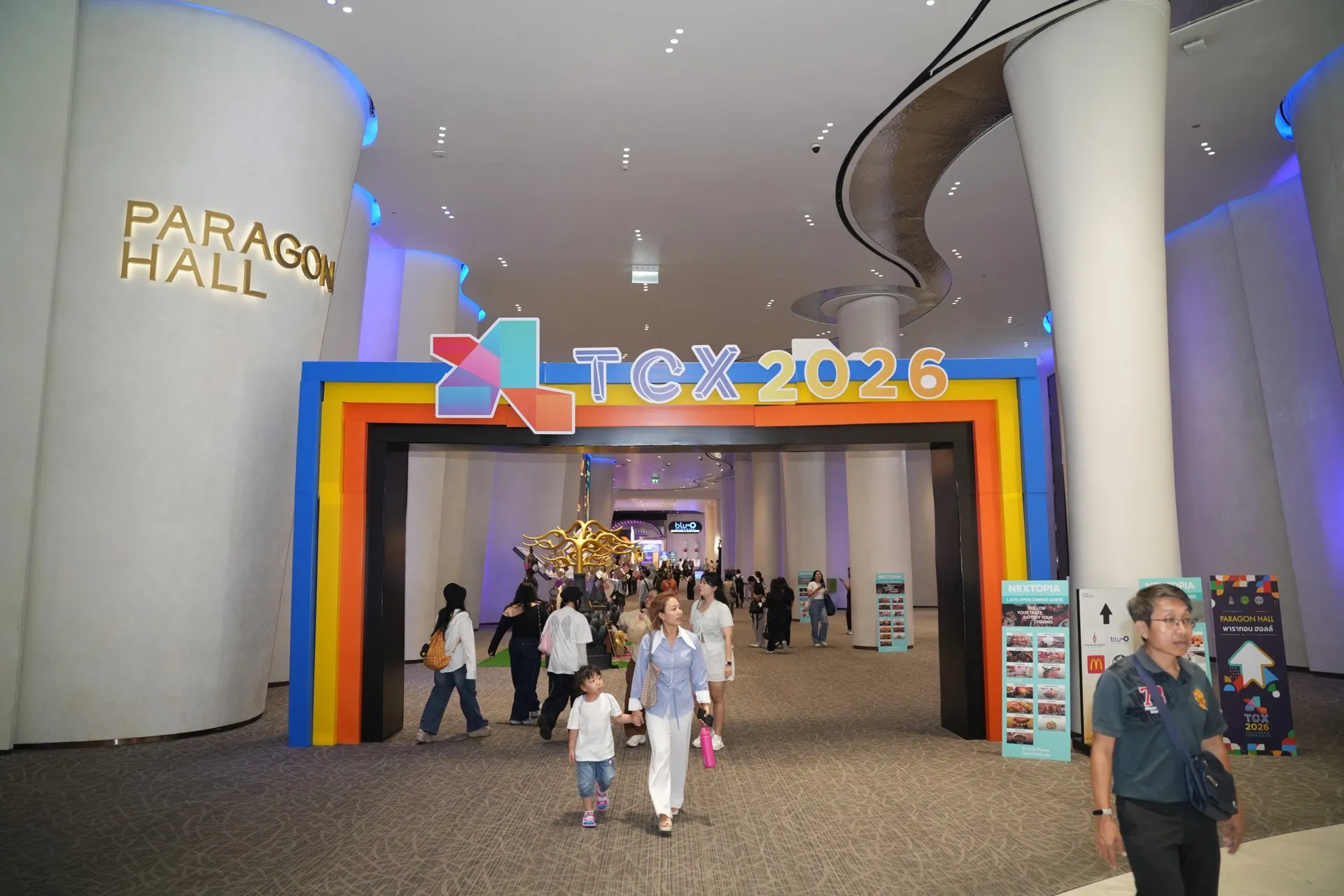
Cinema tells a story through a frame. An exhibition lets the audience step into it. At Thai Content Experience 2026, visitors moved between stage performances, exhibition spaces and attraction worlds inside Paragon Hall, Siam Paragon, Bangkok, from 13 to 16 August 2026.
For our second year contributing to TCX, KAMELION worked with JUNGKA and the wider production team across experience and spatial design, immersive media, interactive systems and technical implementation. The task connected creative ideas with the space, people and technology needed to bring them into the hall.
Start with the whole hall
Each attraction needed an identity, but it also needed to belong to a larger visitor journey. Entrances, exhibition areas, the central stage and waiting spaces were considered together. The master plan gave the team a shared reference for their scale, position and relationship to one another.
Three stories, three entrances
GTH, Girl From Nowhere and Sapheo called for different scenic languages. The GTH entrance brought character imagery, layered surfaces and illuminated signage into one dense horror anthology. The installed Escape from Nanno frontage used height, red banners and a central figure to create a more imposing threshold.
The design work translated those story worlds into spaces visitors could approach and enter. Event-day photographs show the façades in their real setting, alongside the people, queues and neighbouring installations that gave the hall its atmosphere.
From plan to experience
The workflow moved from CAD through SketchUp and Blender into Unreal Engine. Architectural massing, geometry and materials became a real-time walkthrough: a way to review approaches, sightlines, screens and scenic proportions at eye level. The models supported creative and production conversations while dimensions continued to refer back to the plan.
The project film brings that development process together with footage from the event. It moves between digital studies, preparation, attraction interiors, performances and visitor reactions.
Give the image a physical structure
Design development connected visual intent with production detail. The main-stage study brought screen surfaces, truss geometry and lighting notes into one composition. The Sapheo ride study paired a curved panoramic screen and raked seating platform with front, side, plan and isometric views.
These drawings record the design process. Read beside the event photography, they show the different questions answered by a model, a technical view and the space in use.
The room comes alive
Inside the attractions, seating, coloured light, haze and performance changed how the spaces were experienced. On the main stage, the backdrop became part of a live composition with performers and show lighting. Spatial design had to account for these layers together.
The project also included development of visitor booking and access tools. This connected attraction and session information with the practical journey toward the entrance, alongside the physical experience.
A shared production
KAMELION: experience and spatial design, visualization, immersive media, interactive systems and technical implementation. Project collaboration: JUNGKA, P’Noom, P’Goff Paween, and the teams, partners, vendors and fellow companies who brought TCX 2026 to life.
Event photography and the project film are presented from the KAMELION TCX 2026 archive. Underlying films, characters, music and performances remain credited to their respective creators and rights holders. Our portfolio describes KAMELION’s contribution within that shared production.
- Experience design, immersive media and technical implementation
- KAMELION
- Project collaboration
- JUNGKA, P’Noom, P’Goff Paween and the TCX 2026 production teams